
Design Patterns In Software Programming
Software design patterns are important tools for providing solutions to the problems occurring during software development. They are reusable solutions for design challenges. These are generally blueprints and not the exact code. The key characteristics of design patterns are:
- The patterns are reusable, which means the same pattern can be applied to different problems.
- They are a standard blueprint or a template for providing a standard solution to the same kind of problems.
- These patterns make software development easier and faster, as developers do not need to search for solutions here and there.
Why should you know about design patterns?
- They provide tried and tested solutions to the problems.
- These patterns often include best practices to be followed in coding.
- Reduce redundancy and development time.
- It is possible to generate reusable components for use across various applications.
Types of Design Patterns
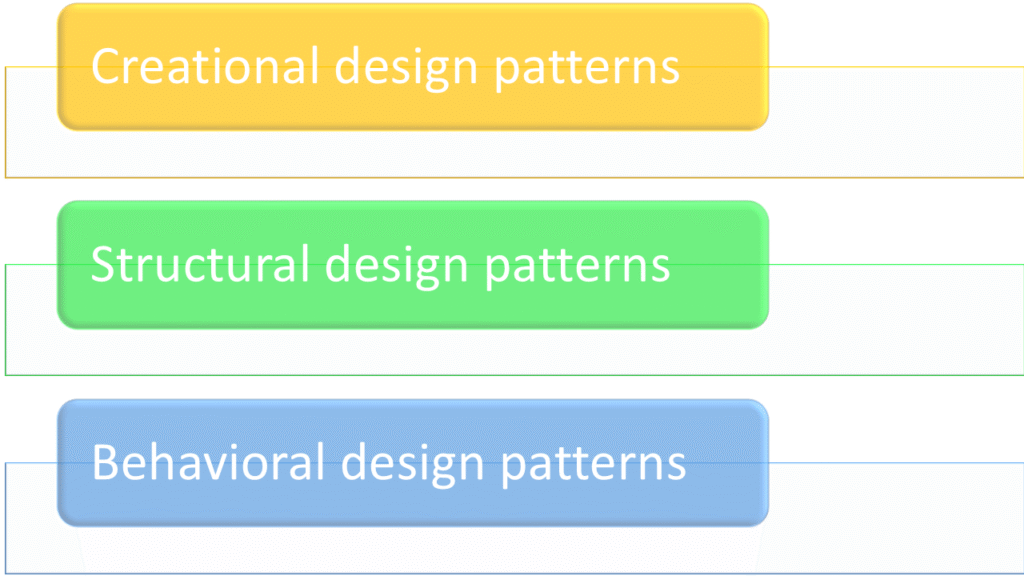
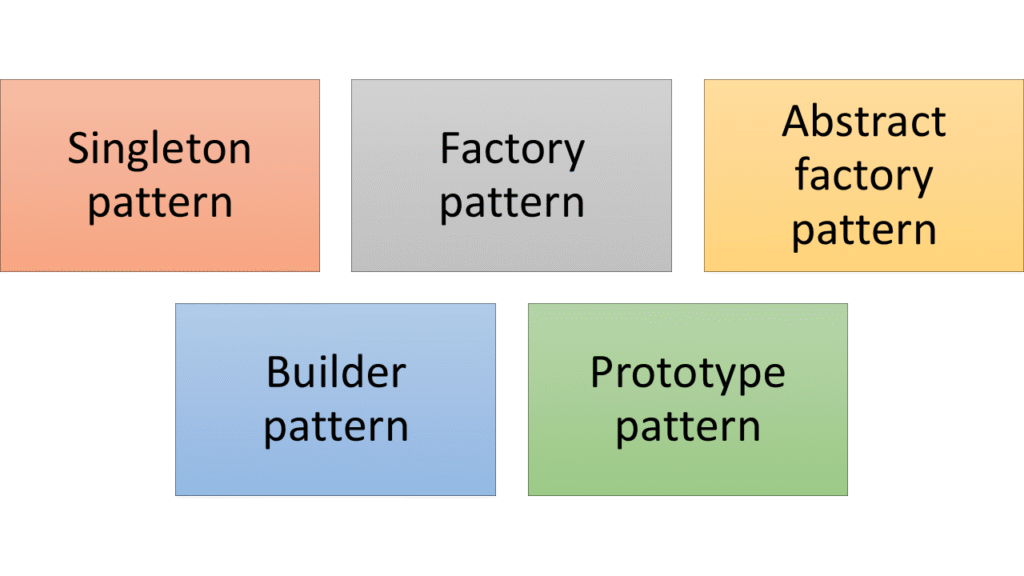
Creational Design Patterns
These design patterns address the problem of object creation. They make the task of object creation, composition, and representation different from the system. This category includes 5 patterns. Creational patterns hide object construction, provide encapsulation, and promote loose coupling. Without these patterns, code becomes tightly coupled to the concrete class. Also, the object creation logic becomes duplicated.
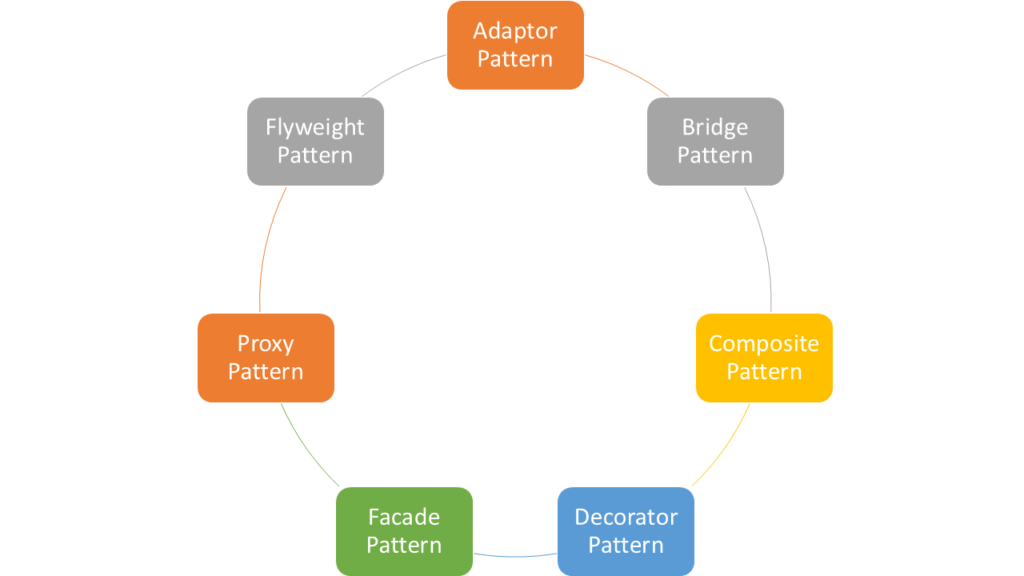
Structural Design Patterns
These patterns solve the problem of how the objects and classes are composed to provide a structure. There are 7 design patterns under this category. They define how objects and classes are connected to form a large structure. They are useful when the UI/Business/Data layer becomes tightly tangled. These patterns also help when classes take on too many responsibilities.
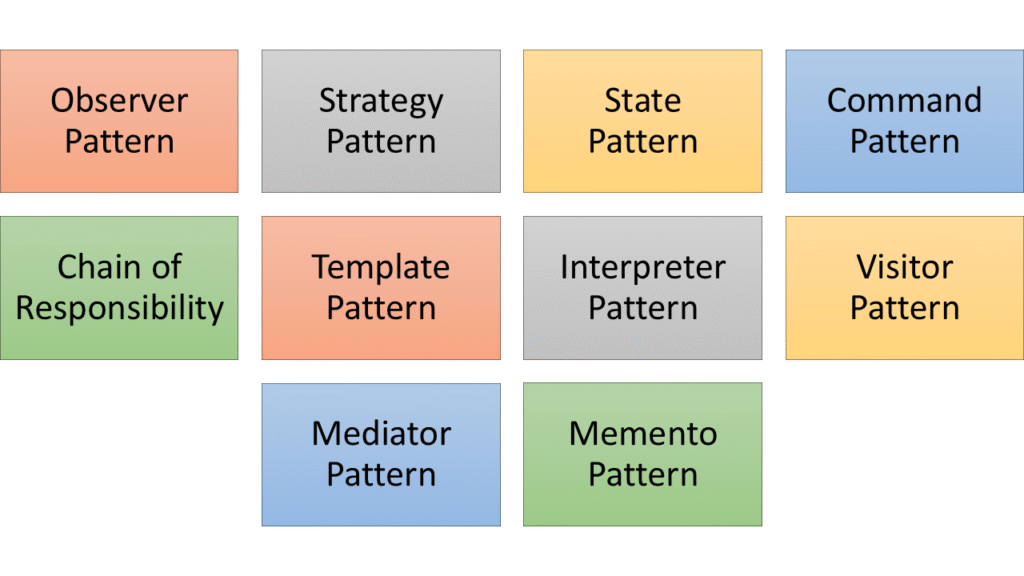
Behavioral Pattern
These concern algorithms and the assignment of responsibilities between objects. They define a pattern of communication between the objects. They help objects to communicate, delegate tasks, and vary behavior without changing their classes. These patterns promote loose coupling, improve flexibility, and reuse. These allow changing behaviour at runtime. They are 10 in number.
Thus, Design patterns make our lives easier. By incorporating them in our coding style, we can save a lot of time with clean code having best practices.
In the upcoming blogs, we will discuss each design pattern in detail.